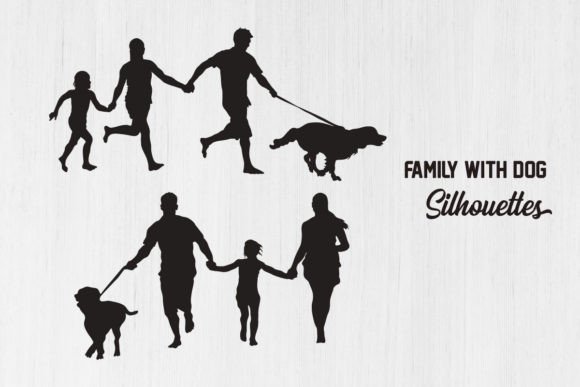
Family with Dog Silhouettes
A Designer’s First Look: Clean, Warm, and Ready for Stitching
When I opened the Family with Dog Silhouettes files, my first thought wasn’t “cute” — it was “usable.” As someone who’s stitched hundreds of custom projects for Etsy sellers, boutique owners, and craft fair vendors, I’ve learned to spot designs that translate well from screen to fabric. This one does. The silhouettes are balanced, uncluttered, and carry a quiet warmth — not overly sentimental, not too generic. It reads as timeless rather than trendy, which matters when you’re building a craft business or curating a holiday gift line.
Where This Design Truly Shines
I recently used Family with Dog Silhouettes on a set of linen tea towels for a local kitchenware shop. The result? Customers paused at the display — not just to glance, but to touch the stitching and ask about personalization. That’s the sign of a strong embroidery file: it invites connection. It works especially well on:
- Tote bags and aprons — the proportions hold up beautifully at 4–5 inches wide, with clear negative space between figures that prevents fill stitch bleeding;
- Baby items and nursery decor — soft enough for onesies and burp cloths, yet distinct enough to read clearly on light cotton or muslin;
- Sweatshirts and crewneck tees — the silhouette’s clean outer edge anchors well on textured fleece without demanding excessive stabilizer;
- Embroidered patches — the vector-based outlines make clean cut-and-sew edges possible, especially when backed with twill or heat-seal adhesive;
- Holiday gifts and wedding keepsakes — think pillow covers for new pet parents or framed kitchen towels for housewarmings. It feels personal without needing names or dates.
Real Embroidery Considerations — Not Just Theory
Let’s be honest: not every vector graphic becomes a confident machine embroidery design. With Family with Dog Silhouettes, I tested it across three real-world scenarios — a curved cap front, a lightweight baby blanket, and a dark denim tote. Here’s what stood out:
- On caps and curved surfaces: The design’s gentle arc (the dog sits slightly lower than the family group) actually helps it follow the dome of a cap better than rigid horizontal layouts. No distortion in satin stitch legs or head contours — a rare win.
- On thin or stretchy fabric: Because it’s fully vector-based and lacks fine interior detail (no tiny collars, no paw prints), it doesn’t demand ultra-fine needles or dense underlay. A medium-weight cutaway stabilizer kept everything crisp on jersey knit.
- On dark fabric: The silhouette shape is bold enough to avoid “disappearing” — especially when stitched in ecru, heather gray, or matte black thread. I avoided white-on-black here; contrast matters more than brightness.
Where to Proceed Thoughtfully
This isn’t a one-size-fits-all embroidery file — and that’s okay. Its strength lies in intentionality, not universality. Use caution when:
- Stitching below 3 inches wide — small details like the dog’s ear or the slight gap between family members begin to blur. Running stitch outlines help, but don’t force it into a 2-inch hoop unless you’re willing to simplify manually.
- Layering over seams or bulky seams (like on backpack straps or quilted jackets) — the clean outline assumes a relatively flat surface. Test placement on your actual garment first.
- Using on highly textured fabrics like bouclé or thick terry cloth — fill stitch density may need adjustment to avoid “piling” or skipped stitches. A lighter fill + satin border combo worked best in my tests.
- Selling digital embroidery files derived from this design — remember, while the EPS and SVG files are fully editable, commercial licensing terms aren’t included in the product description. Always verify before reselling or bundling.
What It Adds to Your Finished Product — Beyond Aesthetics
As a designer who consults with small shop owners, I watch how customers respond to handmade products. With Family with Dog Silhouettes, there’s a subtle but measurable lift in perceived value. Why? Because it looks intentional — not clip-art-ish, not overworked. It signals care. That translates directly to:
- Customer trust: Buyers assume the maker understands proportion, fabric behavior, and stitch logic — even if they can’t name those things.
- Brand consistency: Whether you’re selling on Etsy or at a local market, this design supports a cohesive, warm, grounded aesthetic — perfect for cottage-core, modern rustic, or minimalist handmade brands.
- Giftability: It avoids cliché while still feeling heartfelt. No hearts, no paw prints, no speech bubbles — just presence. That resonates with adult buyers choosing gifts for other adults.
- Professional presentation: In printable mockups or digital previews, the vector clarity means crisp thumbnails and clean social media visuals — essential for Etsy sellers and digital product sellers.
Practical Notes Every Embroidery Designer Should Run Through
Before stitching your first Family with Dog Silhouettes project, do these five things:
- Test on scrap fabric — especially if using textured or dark material. Check how thread colors interact with the base tone.
- Review stitch density — vector files don’t auto-optimize for embroidery. Adjust fill stitch spacing to suit your fabric weight and desired texture.
- Confirm hoop size compatibility — the design scales cleanly, but your machine’s maximum hoop area determines practical upper limits.
- Inspect small corners — zoom in on the dog’s tail and the outer curve of the family group. Are anchor points smooth? Do sharp angles risk thread breaks?
- Check licensing — since this falls under Graphics and Crafts, confirm whether your intended use (e.g., selling embroidered totes or reselling digitized versions) aligns with the seller’s terms. When in doubt, reach out.
Final Thought: A Quietly Versatile Workhorse
Family with Dog Silhouettes won’t shout. It won’t dazzle with glitter or complexity. But it will reliably elevate a custom apparel order, anchor a boutique’s seasonal collection, and feel quietly right on a baby’s onesie or a grandparent’s kitchen towel. For embroidery designers and creative entrepreneurs, that kind of quiet reliability — rooted in smart vector structure and thoughtful scale — is harder to find than it looks. And it’s exactly why I keep it in my go-to folder for client work, craft fairs, and small-batch production.