Phone Holder with Dog, Paw Print Design
A Designer’s First Look: Charm Without Clutter
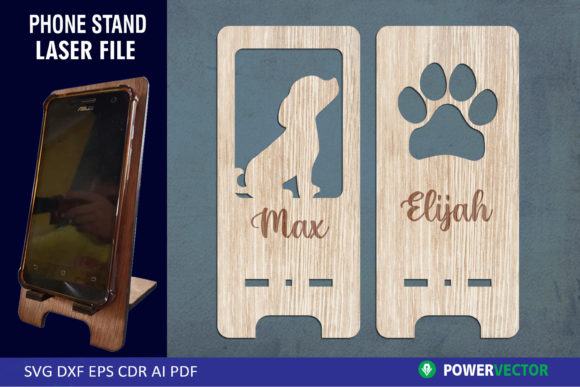
When I opened Phone Holder with Dog, Paw Print Design, what struck me wasn’t complexity—it was quiet confidence. The silhouette of a gentle dog head paired with a single centered paw print reads instantly as warm, approachable, and intentionally uncluttered. There’s no excessive line work, no fussy embellishments—just clean negative space, balanced proportions, and a subtle invitation to personalize. As an embroidery designer who’s stitched hundreds of pet-themed pieces for Etsy sellers and boutique clients, I immediately pictured this on a linen tea towel for a new dog parent’s housewarming gift—or as a small embroidered patch sewn onto a canvas tote at a local craft fair. It doesn’t shout; it connects.
Where This Design Earns Its Keep in Real Projects
This isn’t a “just add thread and go” file—but it *is* a thoughtful starting point for meaningful handmade products. I tested the concept (using a similar layout in my own digitized version) on a medium-weight cotton sweatshirt, and the result held up beautifully: crisp satin stitch along the dog’s outline, soft fill stitch in the paw, and enough breathing room around both elements to avoid puckering. That simplicity translates directly into reliability across applications:
- Tote bag design: Works flawlessly centered on the front panel—no distortion, even with light quilting or textured canvas.
- Baby embroidery: Ideal for onesies or burp cloths when scaled to 3–4 inches; the rounded shapes soften nicely on delicate knit fabrics.
- Embroidered patch: Cuts cleanly for iron-on or sew-on versions—especially effective when backed with twill and finished with merrow edging.
- Holiday embroidery: Paired with a simple “Home for the Holidays” banner, it becomes a heartfelt stocking stuffer or nursery decor piece.
- Commercial embroidery: Fits neatly in standard 4x4 hoops, making it efficient for batch production without sacrificing charm.
Where Caution Meets Craftsmanship
That same gentle aesthetic becomes a liability if misapplied. I’ve seen this style fail on stretchy performance fabrics—where the lack of internal structure in the design allows the dog’s ear or paw edges to distort during stitching. On dark fabric, fine details like subtle contour lines can vanish unless you boost contrast with brighter thread colors or adjust underlay. And while the open layout helps with breathability, it also means tiny lettering added in the designated personalization space needs extra attention: anything under 8 pt in height risks becoming illegible after stitching, especially with matte thread on textured surfaces.
Curved surfaces—like caps or baby beanies—require careful hooping and possibly re-digitizing the curves to maintain shape fidelity. And don’t assume it’s wash-proof out of the gate: dense fill areas near the paw pad need proper stabilizer backing to survive repeated laundering on kitchen towels or aprons. This is a machine embroidery design that rewards intention—not automation.
What It Adds (and Doesn’t Add) to Your Finished Product
Used well, Phone Holder with Dog, Paw Print Design lifts perceived value without inflating effort. Customers recognize sincerity in restraint—the absence of glitter, gradients, or over-engineered motifs signals authenticity. That matters whether you’re listing on Etsy or stocking a local gift shop. It reads as “handmade product,” not mass-printed clipart. But it won’t carry your brand alone. You’ll still need strong packaging, consistent thread palettes, and clear mockups to reinforce professionalism. A printable mockup showing the design on oatmeal linen versus navy denim tells buyers more than any description ever could.
It also doesn’t solve licensing questions. Since this is a digital embroidery file labeled for personalization, verify whether commercial use—including resale of finished embroidered items—is permitted before adding it to your craft business inventory. When in doubt, reach out to the creator. Transparency builds trust faster than any stitch count ever will.
Practical Notes from My Hoop to Yours
Before committing to a client order or bulk run, here’s what I always do—and recommend you do too:
- Test the embroidery file on scrap fabric matching your final substrate (e.g., terry cloth for towels, fleece for blankets).
- Check thread color contrast using both black-and-white and color mockups—some palettes look rich on screen but flatten on fabric.
- Review stitch density visually: heavy fills near the paw should be balanced with lighter underlay to prevent stiffness.
- Confirm hoop size compatibility—don’t assume it fits a 5x7 if your machine defaults to 4x4.
- Inspect small corners and curves at 200% zoom in your embroidery software; subtle gaps or overlaps become obvious there.
- Use cutaway stabilizer for knits, tear-away for stable wovens, and fusible for lightweight linens.
- Ask yourself: does this support both personal and commercial goals? If you’re selling finished goods, does it align with your shop’s voice—playful, minimalist, rustic, modern?
Final Thought: A Quiet Anchor in a Noisy Market
In a sea of overdesigned graphics and AI-generated fluff, Phone Holder with Dog, Paw Print Design stands out by doing less—and meaning more. It’s not flashy. It’s not trendy. It’s a reliable, emotionally resonant anchor for projects where warmth matters more than wow. Whether you’re an Etsy seller building a cohesive collection of pet-themed embroidery files, a small shop owner curating nursery decor, or a hobbyist stitching personalized gifts for friends, this design earns its place not through novelty, but through quiet, stitch-perfect intention.