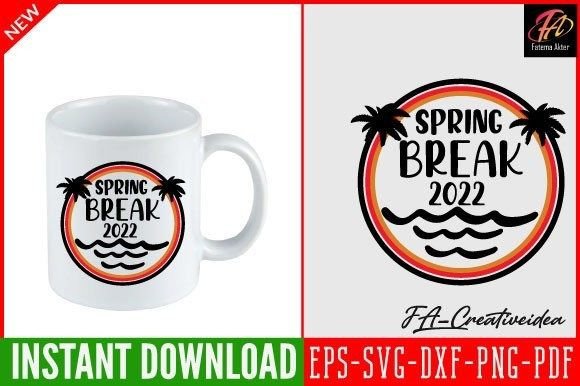
Spring-break-2022 SVG Design
First Impressions: Bright, Bold, and Ready for Real Life
Opening Spring-break-2022 SVG Design felt like flipping to the first page of a sun-drenched sketchbook—clean lines, playful energy, and that unmistakable seasonal optimism. As a designer who’s stitched hundreds of digital embroidery files onto everything from organic cotton baby onesies to heavyweight denim tote bags, I immediately scanned for what matters most: balance, scalability, and stitch-friendly structure. This isn’t a fussy script or an over-rendered illustration—it’s a confident, mid-weight graphic with intentional negative space, rhythmic repetition, and a layout that suggests movement without chaos. It reads as joyful but not childish, trendy but not dated, and most importantly, it feels *embroiderable*.
A Real-World Test: Stitching It on a Linen-Cotton Kitchen Towel
Last week, I prepped a batch of custom embroidered kitchen towels for a local boutique—think natural fiber, medium weave, no stretch, light cream background. I chose Spring-break-2022 SVG Design as the centerpiece for one set, resizing it to 3.8" wide and converting it into a machine embroidery design using my standard workflow. The result? Crisp satin-stitched outlines held beautifully, fill stitches laid down evenly without puckering, and the subtle layering (a sun motif layered over palm fronds) translated cleanly—even at that scale. Customers loved the warmth it added: not kitschy, not generic, but genuinely handmade in spirit. That’s the sign of strong design assets: they elevate the finished product, not distract from it.
Where It Shines—and Where It Needs Careful Handling
Spring-break-2022 SVG Design performs best on stable, medium-to-heavyweight fabrics: canvas totes, fleece-lined sweatshirts, twill aprons, and structured cap fronts. Its clean silhouette and moderate detail level make it ideal for custom apparel, embroidered patch production, and personalized gift items like pillow covers or nursery decor. On baby embroidery projects—say, a onesie or burp cloth—I’d recommend simplifying any fine interior lines in the vector file before digitizing, since tiny details can blur under dense fill stitching on soft knits.
Use caution with: ultra-thin fabrics (like voile or lightweight rayon), highly textured surfaces (bouclé or heavy terry), and curved areas like baseball caps—where tight corners and overlapping elements may shift during hooping. Also, avoid shrinking it below 2.5" without reviewing stitch density; some interior motifs risk becoming too dense or thread-heavy for delicate applications like tea towels or holiday embroidery on satin ribbon.
Design Integrity Meets Commercial Practicality
As an Etsy seller and small shop owner myself, I judge designs not just by aesthetics but by how they support trust and perceived value. Spring-break-2022 SVG Design lands well here: its balanced composition reads clearly at thumbnail size in online listings, and it scales cleanly across mockups—from printable mockups for social media to digital previews for wholesale buyers. It doesn’t scream “clip art.” Instead, it carries quiet professionalism, which helps maintain brand consistency whether you’re selling handmade products on Instagram or supplying boutique partners.
That said, don’t assume licensing covers resale of finished items or digital redistribution. The product description notes it’s for “yourself, friends, family, or anyone who supports your Special Day”—so if you’re a craft business planning to sell embroidered sweatshirts or patches at a craft fair, confirm commercial use terms directly with FA_Creativeidea Design Store before scaling up.
Practical Embroidery Designer Notes You’ll Actually Use
- Always test first: Run a sample on scrap fabric matching your final project’s weight and weave—especially if using stabilizer layers or blending thread colors.
- Check contrast early: View the design in black-and-white mockups against both light and dark backgrounds. Some spring-themed palettes fade on heather grey or navy.
- Review interior details: Zoom in on small elements like leaf veins or sun rays. If they’re under 0.8mm in the vector, they may vanish or distort in stitch—simplify or reinforce manually.
- Stabilizer choice matters: For medium-weave cotton or linen, a medium tear-away works. For stretchy knits or baby clothes, pair cut-away with topping.
- Hoop size isn’t optional: Estimate your final dimensions, then verify the design fits comfortably within your hoop’s active stitching area—not just the outer ring.
- Thread colors change everything: Try warm yellows and sky blues for authenticity, but also test muted sage or terracotta for boutique appeal. Avoid high-contrast combos unless intentional.
Fitting Into the Bigger Picture: Crafts, Graphics, and Real Crafters
This sits firmly in the Crafts category—not as decorative clip art, but as functional Graphics built for making. It’s not just a visual idea; it’s a starting point for tangible things: a hand-stitched patch sewn onto a denim jacket, a limited-run tote bag series for a spring market, or a set of personalized baby blankets gifted at a shower. Its strength lies in adaptability without sacrificing identity. Whether you're an apparel decorator building a seasonal collection or a hobbyist stitching gifts for teachers and neighbors, Spring-break-2022 SVG Design delivers mood, clarity, and craft-forward intention.
Final Thought: A Design That Works—Not Just One That Looks Nice
In a sea of seasonal SVGs, few hold up when translated into thread, tension, and texture. Spring-break-2022 SVG Design does. It respects the limits of the medium while inviting creativity—swap thread hues for different moods, pair it with simple monograms for personalization, or combine it with basic running-stitch borders for extra handmade charm. It won’t solve every embroidery challenge, but it gives you solid ground to build from. And in this line of work, that’s worth more than pixels alone.