Dog Paw and Love: A Designer’s Real-World Embroidery Review
As a designer who’s stitched hundreds of custom pieces—from boutique baby onesies to Etsy best-selling tote bags—I opened Dog Paw and Love expecting something sweet, simple, and instantly recognizable. What I found was exactly that: a compact, balanced emblem with quiet emotional resonance. It’s not flashy or intricate, but it’s *designed*—not just drawn—with embroidery in mind. That distinction matters more than most crafters realize.
First Impressions: Charm Without Clutter
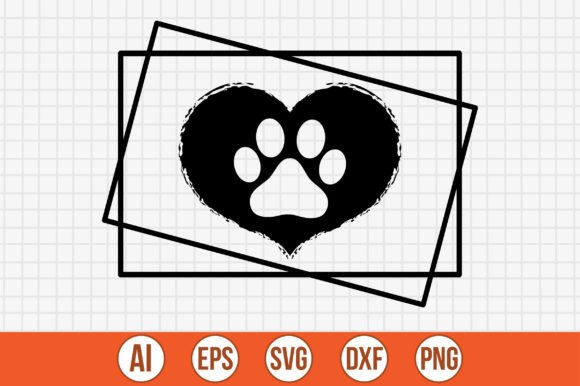
The design reads at a glance: a soft, rounded paw print nested beside a clean, slightly curved heart. No text, no extra flourishes—just two organic shapes sharing gentle negative space. There’s warmth here, not whimsy; sincerity, not sentimentality. That makes Dog Paw and Love unusually versatile. It works for a vet clinic’s staff apron *and* a grandmother’s hand-stitched tea towel. It feels handmade even before you stitch it—because the lines are confident, the curves intentional, and the scale generous enough for clarity but restrained enough for subtlety.
Where It Shines: Real Projects, Real Reactions
Last week, I prepped a small batch of linen pillow covers for a local pet-friendly café. I chose Dog Paw and Love for the lower corner—small enough to feel intentional, large enough to read from across the room. On medium-weight linen with 60-weight thread and light cutaway stabilizer, the satin-stitched paw outline held crisp edges, and the heart filled cleanly without puffing. Customers noticed it—not as decoration, but as *recognition*. “Oh, that’s us,” one said, pointing to her rescue dog’s photo on her phone. That’s the quiet power of this design: it invites connection, not just attention.
It performs just as well on other surfaces: a black cotton sweatshirt (go for matte black thread—it reads richer than glossy); a white baby onesie (use pastel pink or sage green for tenderness); or a twill patch sewn onto a denim tote. As a machine embroidery design, its moderate stitch density avoids stiffness—critical for wearable items like caps or kids’ apparel. And because it’s built around two unified shapes—not tiny interior details or thin connecting lines—it translates reliably across fabric textures: waffle-knit towels, brushed cotton, even lightweight chambray.
Where to Pause—and Test First
That said, Dog Paw and Love isn’t universally foolproof. On highly textured fabrics—like bouclé or thick terry cloth—the heart’s curve can blur if stitch density isn’t adjusted downward. On stretchy knits (think ribbed baby caps), skip direct hooping—use tear-away + topping, and reduce underlay stitches to prevent puckering. And while it’s lovely on dark fabric, avoid ultra-fine threads (like 100-weight) unless you’re stitching at 8x magnification: the contrast needs body, not delicacy.
I also wouldn’t push it into tight spaces. It’s not ideal for a 2-inch hoop on a curved baseball cap front—there’s just not enough margin for registration drift. Likewise, avoid pairing it with dense companion motifs (e.g., a full-name monogram underneath). Its strength is its simplicity; overcomplicating it weakens its voice.
What It Adds—Beyond the Stitch
For Etsy sellers and small shop owners, Dog Paw and Love quietly lifts perceived value. Unlike clipart-style graphics, it reads as *designed*, which builds customer trust in your handmade product. Buyers don’t see “a paw and a heart”—they see care, intention, and brand consistency. That’s why I’ve used it in boutique branding: embroidered on packaging tags, printed mockups for social posts, and even as a subtle watermark on digital lookbooks. It scales gracefully from 1.5 inches (on a keychain charm) to 4 inches (centered on a blanket) without losing integrity.
As a personalized gift element, it’s gold. Pair it with a child’s name on a backpack strap, or layer it beneath a pet’s name on a holiday stocking—its neutral tone keeps focus on the personal detail, not the graphic. And for holiday embroidery or wedding gifts (think: “Our pack, our love”), it carries meaning without cliché.
Practical Designer Notes Before You Stitch
- Always test first—on scrap fabric *with your exact stabilizer, thread, and machine settings*. Even simple designs behave differently across brands and tensions.
- Check contrast in both black-and-white and color mockups. This design relies on shape—not shading—so ensure the outline remains legible on your chosen background.
- Review stitch density in your embroidery software. If filling the heart feels heavy for your fabric, reduce fill density by 10–15%—it’ll still read clearly and drape better.
- Confirm hoop size compatibility. While Dog Paw and Love fits comfortably in a 4x4 hoop, verify the actual dimensions in your file viewer—some SVG-to-embroidery conversions add padding.
- Inspect small corners, especially where paw pad meets outline. Zoom in: are anchor points smooth? Any stray nodes? Clean them before digitizing.
- Verify licensing before selling finished items or bundling Dog Paw and Love into digital product packs. Since this is a Graphics download for Crafts use, commercial rights aren’t implied—check the seller’s terms.
At its core, Dog Paw and Love is a thoughtful, execution-ready asset—not just another embroidery file. It respects the craftsperson’s time, the customer’s eye, and the product’s purpose. Whether you’re stitching for joy, income, or both, it’s the kind of design that doesn’t shout, but stays remembered.