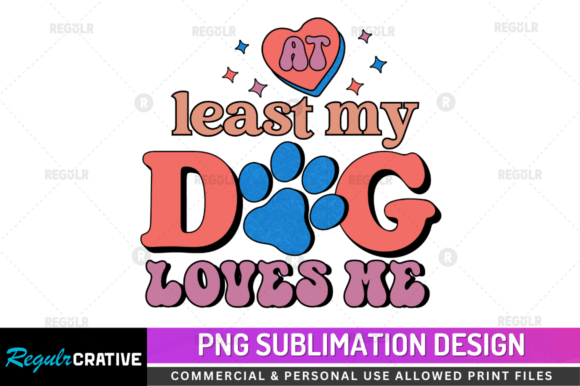
At Least My Dog Loves Sublimation Design
A Designer’s First Look: Charm with a Side of Caution
When At Least My Dog Loves Sublimation Design landed in my inbox, I paused—not because it’s flashy, but because it’s disarmingly sincere. The phrase lands like a quiet laugh between friends: wry, affectionate, and instantly relatable to dog lovers and overworked creatives alike. As an embroidery designer who tests hundreds of graphics each year for real-world stitchability, I immediately asked: Does this hold up when translated into thread? Not just as a print-on-demand PNG—but as a machine embroidery design on cotton twill, organic baby onesies, or a textured linen tote.
Real Project Test: A Custom Embroidered Tote for a Local Pet Rescue Pop-Up
Last month, I used At Least My Dog Loves Sublimation Design as the centerpiece for a limited-run embroidered tote bag—part gift, part fundraiser for a neighborhood dog rescue. I sized it to fit a 4×4 hoop, centered it on the front panel of a natural canvas tote, and chose soft ecru thread on charcoal fabric. The result? Warm, legible, and surprisingly dimensional—especially where the lettering curved gently over the fabric’s slight weave. Customers paused, smiled, and said, “That’s *so* me.” That kind of emotional resonance is gold for handmade product storytelling—but only if the execution supports it.
Where It Shines (and Where It Needs Extra Care)
At Least My Dog Loves Sublimation Design works best when treated as a confident, conversational accent—not a dense focal graphic. It excels on:
- Custom apparel: Sweatshirts, crewnecks, and relaxed-fit tees—especially with open-weave knits that let the stitch texture breathe.
- Tote bag design and apron embroidery: Its horizontal rhythm fits naturally across wide, flat surfaces.
- Personalized gifts like baby blankets or nursery pillows—paired with simple satin-stitch outlines and minimal fill stitch density.
- Small shop product branding: Think tea towels, kitchen linens, or boutique packaging where wit and warmth elevate everyday items.
But tread thoughtfully with:
- Stretchy fabric (like jersey or ribbed knits): Letterforms can distort without proper cutaway stabilizer and reduced top tension.
- Dark fabric or textured surfaces: The design’s thin strokes and subtle spacing need high-contrast thread—avoid pale pastels on navy or black unless you’ve tested visibility.
- Curved surfaces like caps or curved pillow covers: The phrase’s linearity doesn’t wrap well—consider shortening or reformatting for those applications.
- Frequent-wash items (baby clothes, kitchen towels): Confirm your stitch density allows flexibility—overly tight fills may crack or pucker after repeated laundering.
What This Graphics File *Really* Offers—and What It Doesn’t
Let’s be clear: At Least My Dog Loves Sublimation Design is delivered as a downloadable PNG file—not a native embroidery file (.dst, .pes, .jef). That means it’s optimized for sublimation, screen printing, or digital mockups—not plug-and-play stitching. If you’re an Etsy seller or craft business owner planning to embroider it, you’ll need to digitize it first. That’s not a flaw—it’s context. A great digital embroidery file starts with clean vector art or high-res raster input, and this PNG delivers that foundation: crisp edges, balanced kerning, and intentional white space around the phrase.
It does not include pre-digitized stitch types (satin, fill, running), thread color suggestions, or multi-format compatibility. Those decisions rest with you—the designer. And that’s where professional judgment matters most.
Practical Embroidery Designer Notes You’ll Actually Use
Before stitching At Least My Dog Loves Sublimation Design into your next finished product, here’s what I do—and recommend:
- Test on scrap fabric first, especially if using textured, dark, or stretchy materials.
- Check thread color contrast in both natural and artificial light—what reads clearly at noon may fade under café lighting.
- Review stitch density: Aim for medium fill density on letters; too sparse loses impact, too dense risks stiffness on lightweight fabrics.
- Confirm hoop size and placement—this phrase stretches wide, so avoid crowding near seams or side panels.
- Inspect small details at 200% zoom: Are terminals clean? Does the “g” in “loves” have enough breathing room?
- Test it in black and white mockups to assess visual weight before committing to thread.
- Compare light and dark fabric backgrounds—some letterforms gain personality on contrast, others disappear.
- Use proper stabilizer: Tear-away for stable cottons, cutaway for knits or delicate weaves.
- Verify licensing before selling finished items or reselling the digital file—this is a Graphics asset, not automatically cleared for commercial redistribution.
Why It Works for Craft Business Owners—When Used Intentionally
This isn’t a trend-chasing graphic. It’s a quiet anchor—a piece of handmade product storytelling that builds trust through authenticity. For Etsy sellers, it adds personality without clutter. For small shop owners, it turns a plain tote into a conversation starter. For embroidery professionals, it’s a reminder that sometimes the strongest embroidery project isn’t about complexity—it’s about clarity, timing, and knowing exactly who’ll smile when they see it stitched on their sleeve, bag, or baby blanket.
Just remember: At Least My Dog Loves Sublimation Design earns its place not by shouting, but by landing softly—and staying memorable. That only happens when you treat it like the thoughtful Crafts asset it is: tested, tuned, and true to the people who’ll wear it, gift it, or choose it off a shelf because it feels like it was made just for them.