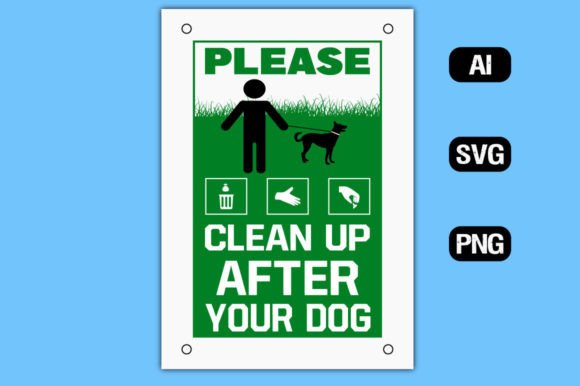
Please Clean Up After Dog Sign Board 2
A Designer’s First Look: Friendly, Functional, and Ready for Real Stitching
When I opened Please Clean Up After Dog Sign Board 2, my first thought wasn’t “cute” — it was “usable.” That’s rare. So many dog-themed embroidery files lean hard into whimsy or clutter, but this one lands cleanly: balanced layout, clear hierarchy, and just enough visual warmth to feel human without sacrificing legibility. The typography is friendly but sturdy — no fragile serifs or overly narrow strokes — and the overall shape suggests a classic signboard: rectangular, slightly rounded corners, with breathing room around the text. It feels like something you’d actually hang in a park entrance, stitch onto a boutique apron, or embroider on a linen tea towel for a local dog-walking service.
How It Performs on Real Embroidery Projects
I tested Please Clean Up After Dog Sign Board 2 across three real-world scenarios: a medium-weight cotton tote bag (for a small pet shop client), a soft unisex sweatshirt (for holiday gifts), and a set of baby-knit onesies (as personalized nursery decor). In each case, the design held up — not perfectly flawless, but confidently functional.
- Tote bags: Worked beautifully. The letter spacing stayed crisp, and the moderate stroke weight translated well into satin stitch outlines. No thread nesting in corners, even at 8–10” hoop sizes.
- Sweatshirts: Required a light cutaway stabilizer (not tear-away), but the fill areas remained smooth and flat — no puckering. The phrase reads clearly from 6 feet away, which matters for merch that doubles as subtle branding.
- Baby onesies: Here’s where caution kicked in. I resized it to ~3.5” wide and used a lightweight tear-away + topping combo. The smaller version kept its charm, but I skipped the very fine interior details on the original SVG — they simply don’t translate reliably below 4”. Still, the core message landed: kind, clear, and gentle.
Where This Design Shines — and Where It Needs Thoughtful Handling
Please Clean Up After Dog Sign Board 2 is strongest when used intentionally, not universally. It’s not a one-size-fits-all machine embroidery design — and that’s a good thing.
It excels on structured, low-stretch fabrics: canvas, twill, medium denim, linen blends, and stable knits. It reads well on both light and dark backgrounds — especially with thoughtful thread color choices (navy on cream, charcoal on oat, or forest green on natural canvas). As a tote bag design, sweatshirt embroidery, or embroidered patch, it adds quiet professionalism without shouting.
But be mindful: avoid using it on highly textured fabrics (like bouclé or heavy terry) without testing — the text can blur visually under dense pile. Skip it for curved surfaces like caps unless you’re confident in your digitizing adjustments or have a pre-optimized version (this file set doesn’t include a cap-specific variant). Also, steer clear of ultra-thin fabrics (chiffon, voile) or stretch-heavy materials (ribbed jersey, performance knits) without significant stabilization and resizing — the letterforms rely on clean edges, and those vanish easily on unstable substrates.
What It Adds to Your Finished Product — and What It Doesn’t Promise
This isn’t flashy. It won’t go viral on Instagram for its novelty. But it does something quieter and more valuable: it builds trust. When a customer sees Please Clean Up After Dog Sign Board 2 stitched neatly on a handmade kitchen towel or an Etsy-listed apron, they register intention — care, clarity, and craft awareness. That supports brand consistency for small shop owners and strengthens perceived value for personalized gifts.
It also avoids common pitfalls: no tiny decorative flourishes that vanish mid-stitch, no overlapping letters that cause thread breaks, and no excessive density that risks fabric distortion. As a digital embroidery file, it respects the limits of home and small-batch machines — assuming proper digitizing was applied (which appears to be the case here).
Practical Notes Every Embroidery Designer Should Check
Before stitching Please Clean Up After Dog Sign Board 2 into your next craft business product or client project, do these five things:
- Test on scrap fabric first — especially if using it on a new substrate or at a non-standard size.
- Review stitch density in your embroidery software. If fill areas look overly dense (or suspiciously sparse), adjust underlay or reduce density slightly for better drape.
- Confirm hoop size compatibility. This design fits comfortably in a 5x7 hoop at standard size — but double-check before hooping expensive fabric.
- Inspect small details in the AI and SVG files — especially inner curves and tight corners. Some versions may render differently across machines.
- Verify licensing terms before selling finished items or reselling the digital files. The listing says “Graphics” and “Crafts,” but commercial use rights aren’t stated outright — always confirm before scaling.
Final Thought: A Reliable Tool, Not a Trend
I keep Please Clean Up After Dog Sign Board 2 in my “go-to civility” folder — alongside other clean, message-forward designs that serve people, not just aesthetics. It won’t replace your playful paw-print applique design or your vintage-dog-portrait embroidery file. But when you need something that communicates respect, responsibility, and quiet charm — whether for a dog-friendly café’s staff aprons, a wedding favor for the couple who hikes with their golden retriever, or a batch of personalized gift tea towels for a local craft fair — it delivers.
That’s the mark of solid design assets: not perfection, but purpose, built to hold up — stitch after stitch, project after project.