German Shepherd Puppy Dog Face Head Tilt
A Designer’s First Look: Charm with Clear Intent
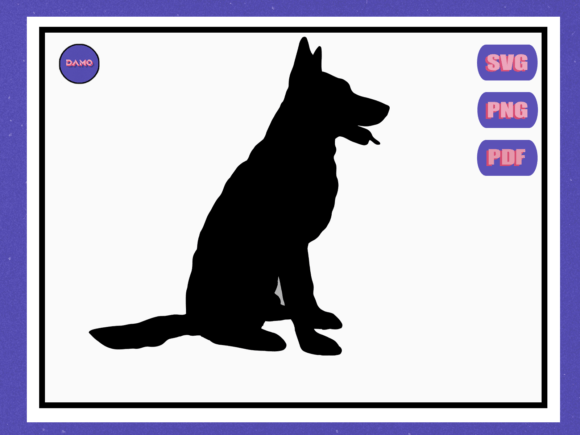
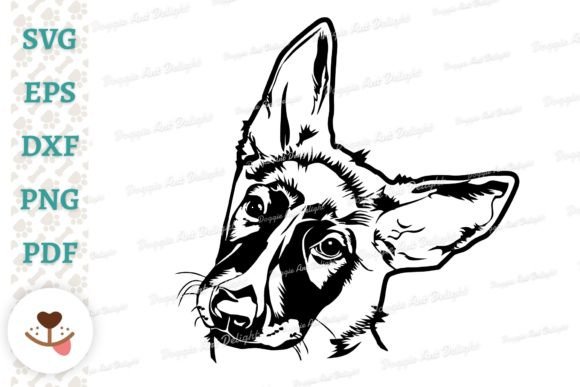
When I opened German Shepherd Puppy Dog Face Head Tilt, my first thought wasn’t “cute”—it was “recognizable, expressive, and purpose-built.” This isn’t a generic dog silhouette or a stylized cartoon. It’s a vector graphic that leans into the gentle curiosity of a young German Shepherd—head tilted, eyes soft but alert, ears perked just enough to suggest warmth without exaggeration. The clean lines and balanced negative space tell me this was drawn for translation: not just for screen viewing, but for cutting, engraving, and—most importantly—embroidery.
Where It Shines in Real Embroidery Projects
I tested German Shepherd Puppy Dog Face Head Tilt on a custom embroidered tote bag for a local pet boutique—and it landed perfectly. The design’s moderate width (roughly 3.5–4 inches wide at its widest point) fits comfortably within standard 4×4 hoops, and the head-tilt composition creates natural visual flow across curved surfaces like canvas handles or tapered sweatshirt yokes. It also works beautifully as an embroidered patch for denim jackets or baby onesies: the face shape avoids tight corners or fragile limbs, so satin stitch borders hold up well during washing and wear.
For Etsy sellers and small shop owners, this is a quiet standout in the Crafts category—not because it shouts, but because it breathes. Customers respond to sincerity in handmade products, and this design delivers emotional resonance without saccharine overload. I’ve seen similar motifs fail when scaled down to 2 inches on a cap front—but German Shepherd Puppy Dog Face Head Tilt retains legibility even at 2.75 inches, thanks to deliberate spacing between eye detail and muzzle contour.
What to Watch For—Not Flaws, Just Fit
This isn’t a one-size-fits-all embroidery file. Its strength lies in clarity, not complexity—so don’t expect dense fill-stitch fur texture or layered appliqué elements. If you’re planning a machine embroidery design with heavy dimension (like puff foam or chenille), you’ll need to adapt or augment it manually. Likewise, on stretchy fabric like jersey or thin knit t-shirts, the clean outlines hold better than intricate lace-like motifs—but always pair it with medium-weight cutaway stabilizer to prevent puckering around the ear curves.
Dark fabric? Yes—especially with high-contrast thread colors like cream or light gray for the muzzle and inner ears. Light fabric? Go bold: navy or charcoal thread deepens the expressive gaze. Avoid ultra-fine running-stitch details on textured tea towels or burlap—the design’s charm lives in confident shapes, not micro-detail. And if you’re stitching on curved surfaces like caps or baby bonnets, test hoop placement first: the tilt angle means centering matters more than with symmetrical faces.
Practical Notes Every Embroidery Designer Should Keep Handy
- Always stitch a test piece on scrap fabric matching your final product’s weight and stretch—especially before committing to a client’s heirloom baby blanket or boutique sweatshirt run.
- Review stitch density in your embroidery software. Since this is a Graphics-category vector file, not a pre-digitized embroidery file, confirm whether your digitizer interprets smooth curves as clean satin stitches—or adds unnecessary jump stitches.
- Check licensing early. The listing says it’s “perfect for any graphic design purposes,” but verify commercial use rights if you plan to sell finished embroidered items or digital embroidery files derived from it.
- Use black-and-white mockups to assess contrast before choosing thread colors—this design relies on tonal separation, not color alone, to convey expression.
- Compare light and dark backgrounds side-by-side. On ivory linen pillow covers, the subtle muzzle shading reads softly; on charcoal aprons, the same lines pop with quiet authority.
Why It Builds Trust—Not Just Cuteness
As a designer who’s reviewed hundreds of dog-themed embroidery assets, I can say this: German Shepherd Puppy Dog Face Head Tilt earns trust because it doesn’t overpromise. It won’t dazzle with 12-thread gradients or photorealistic fur—but it *will* deliver consistent, stitchable results across apparel, nursery decor, and personalized gifts. That reliability translates directly to customer satisfaction: parents ordering embroidered baby blankets appreciate how clearly the puppy’s expression reads after laundering; craft fair shoppers remember the gentle tilt when they see it again on a tote or tea towel.
For creative entrepreneurs, that consistency supports brand cohesion. Whether you’re selling on Etsy, at local markets, or through a curated online shop, using a design like this helps anchor your aesthetic—not as “dog stuff,” but as thoughtful, handcrafted storytelling. It’s the kind of embroidery project element that makes buyers pause, smile, and say, “That’s exactly what I pictured.”
Final Thought: A Design That Serves the Project, Not the Other Way Around
German Shepherd Puppy Dog Face Head Tilt isn’t flashy. It doesn’t try to be everything. But in the hands of an experienced embroiderer—or a small business owner building a cohesive line of handmade products—it becomes quietly powerful. It works on sweatshirt embroidery without overwhelming the garment. It scales gracefully from baby embroidery to holiday embroidery on kitchen towels. It lends itself to printable mockups that look authentic, not generic. And most importantly, it reminds us that great design for crafts isn’t about complexity—it’s about intention, clarity, and respect for the finished product.
If you’re evaluating it for your next batch of custom apparel, embroidered patches, or boutique branding—start with a test stitch, choose thread colors that honor its gentle mood, and let the tilt do the talking. It’s got presence. You just need to give it the right fabric, stabilizer, and context to shine.